



Compared with larger wire rope hoists or complete crane systems, an electric chain hoist is compact, relatively easy to install, and well suited to short- and medium-distance lifting. It can work as a fixed lifting unit, run on a beam with a trolley, or become part of a jib crane, workstation crane, or light overhead crane system.
The important part is choosing the right configuration for the actual job.
When an Electric Chain Hoist Makes Sense?
An Electric Chain Hoist is usually a good choice when the load needs to move vertically in a limited working area and the customer wants faster, more consistent lifting than a manual chain block can provide.
Typical applications include machine shops, assembly stations, maintenance areas, warehouses, fabrication workshops, mold handling, equipment installation, and production lines.
For example, a maintenance team may need to remove motors or gearboxes several times a week. A manual hoist can do the job, but repeated hand pulling becomes slow and tiring.
An electric hoist allows the operator to lift and lower the load using a control pendant or another suitable control arrangement.
In production, this difference becomes even more obvious.
If an operator needs to lift the same component dozens of times per shift, lifting speed, positioning, and ease of operation directly affect productivity.
Fixed Hoist or Travelling Hoist?
This is one of the first decisions to make.
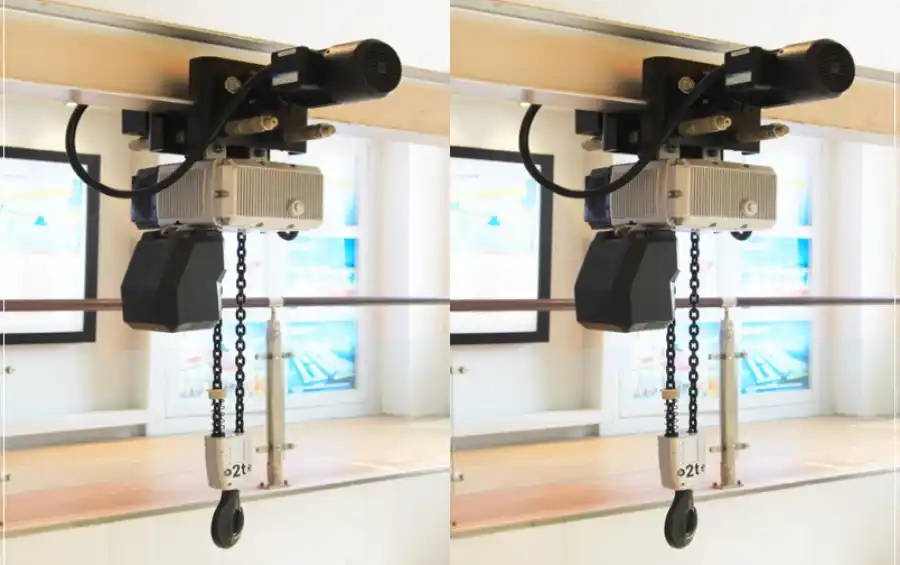
If the load only needs to move up and down at one point, a fixed Electric Chain Hoist may be enough.
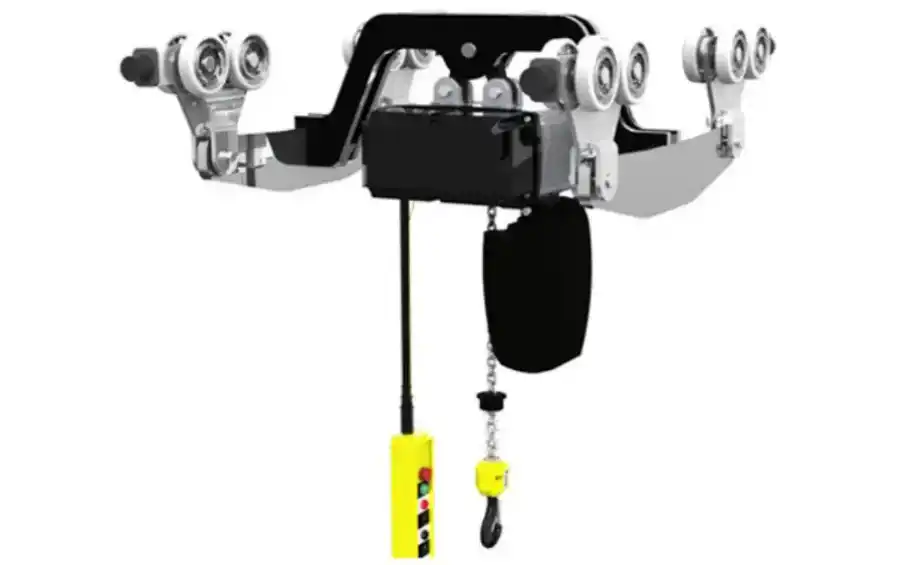
If the load also needs to move horizontally along a beam, the hoist can be used with a trolley.
The trolley may be selected according to the application and required movement.
This simple distinction matters because customers sometimes ask only for “one electric chain hoist” without explaining whether horizontal travel is required.
Before quotation, it is useful to answer one question clearly:
Does the load only need vertical movement, or does it also need to travel along a beam?
That immediately narrows down the correct configuration.
Capacity Is Important, but It Is Not the Only Number
The maximum load is usually the first specification customers provide.
It is important, but it is not enough.
The hoist should be selected according to the real maximum suspended load, including any lifting fixture, hook attachment, clamp, magnet, spreader, or special tooling used with the load.
If a component weighs 1,000 kg and the lifting fixture weighs 150 kg, the total suspended load is already higher than the component weight alone.
Customers should therefore provide the complete lifted weight rather than only the product weight.
It is also useful to explain whether the maximum load is lifted occasionally or during almost every cycle.
That helps determine whether the application is light, moderate, or intensive.
Lifting Height Can Change the Hoist Configuration
Lifting height sounds simple, but it is often misunderstood.
What matters is the actual vertical hook travel required during operation.
For example, the ceiling may be 6 meters high, but the hoist may only need to lift a load 2 meters from a machine table to an assembly position.
In another workshop, the building may be relatively low, but the customer may need the hook to reach close to the floor.
These are different requirements.
When requesting an Electric Chain Hoist quotation, provide both:
-required hook lifting height
-available installation height
This helps determine whether the hoist arrangement will provide enough usable hook travel.
Headroom Matters in Low Buildings
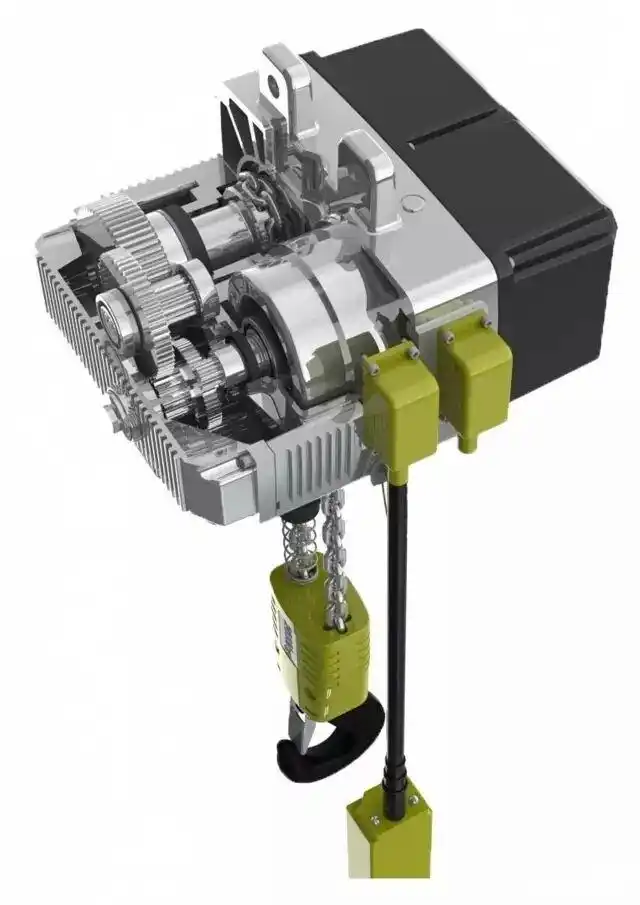
One advantage of chain hoists is their compact size, but the installation space still needs to be checked.
In workshops with low ceilings, every millimeter between the supporting beam and the hook can matter.
If the hoist is installed under an existing beam, the beam height, trolley arrangement, and required hook position should be confirmed before ordering.
A hoist that technically fits the beam may still reduce the available lifting height more than expected.
This is especially important for mold handling, machine loading, and assembly applications where the customer needs the hook as high as possible.
How Often Will the Hoist Be Used?
An Electric Chain Hoist used for occasional maintenance is different from one used continuously on a production line.
The same rated capacity does not mean the same working condition.
Before selecting the hoist, consider:
-lifting cycles per hour
-working hours per day
-number of shifts
-average load
-maximum load
-average lifting distance
-frequency of starting and stopping
This information helps match the hoist to the actual duty.
For a production line, repeated short lifting cycles can be more demanding than occasional long lifts.
A good quotation should therefore be based on real working frequency, not just capacity.
Where Electric Chain Hoists Are Commonly Used?
The product works well in applications where compact lifting and frequent local handling are more important than long-distance crane travel.
One common example is assembly work.
Operators can use the hoist to lift parts into position while keeping both hands available for alignment and installation.
Another application is machine loading.
A hoist mounted on a jib crane or travelling beam can help move raw material, fixtures, or components into machining equipment.
Maintenance departments also use electric chain hoists for pumps, motors, valves, gearboxes, and other removable equipment.
In warehouses, they can support handling where forklifts are not practical or where vertical lifting is required in a fixed area.
Electric Chain Hoist or Wire Rope Hoist?
These products overlap in some applications, but they are not always interchangeable.
An Electric Chain Hoist is often selected for compact lifting systems, shorter lifting heights, smaller working areas, and workstation-level handling.
A wire rope hoist may be more suitable when the application requires different lifting characteristics, longer lifting heights, higher capacities, or integration into larger crane systems.
The best choice depends on the job rather than simply on which product is “better.”
For a small assembly station, a chain hoist may be more practical.
For a large overhead crane handling heavy loads across a wide workshop, a wire rope hoist may be more appropriate.
Information Needed for an Electric Chain Hoist Quotation
A clear inquiry can usually be prepared with a small amount of information.
Send the following details:
-maximum lifting capacity
-required lifting height
-fixed installation or trolley travel
-required horizontal travel distance, if applicable
-beam size or beam drawing
-working hours per day
-approximate lifting cycles
-indoor or outdoor use
-power supply
-required control method
-material or equipment being lifted
-available installation height
-photos or drawings of the working area if available
If the Electric Chain Hoist will be used on a jib crane, workstation crane, or existing runway, include that information as well.
A Simple Way to Choose the Right Electric Chain Hoist
Start from the load and working area, not from a catalog model number.
First, confirm the maximum total load.
Then confirm how high the load needs to move.
Next, decide whether the hoist stays fixed or travels along a beam.
After that, check the available installation space, working frequency, and required positioning accuracy.
These few points usually determine most of the final configuration.
An Electric Chain Hoist is a relatively compact lifting product, but correct selection still matters.
For a fast quotation, send the capacity, lifting height, installation type, beam size, power supply, and daily working frequency.
With that information, the hoist can be matched to the actual workstation instead of being selected only by rated load.
